Custody Battles – How Courts Make Decisions in the Best Interest of Children

OVERVIEW
In this episode of the DivorceLawyer.com Podcast, host Rob Roseman interviews Carla Stern, a respected family law attorney in Georgia. They discuss the complexities of custody battles, the factors courts consider in determining the best interests of children, and common misconceptions about custody. Carla shares insights from her extensive experience, emphasizing the importance of understanding the legal process, documenting history, and maintaining a focus on the children’s welfare during contentious divorce proceedings.
HIGHLIGHTS
- Carla Stern has over 30 years of experience in family law.
- Family law is about helping families, especially children.
- Custody decisions are based on the best interests of the child.
- Judges consider multiple factors when making custody decisions.
- Parents often have misconceptions about losing custody.
- Addiction issues can complicate custody cases.
- Children’s wishes are considered but not the sole factor.
- Documenting history is crucial in custody cases.
- Knowledge of the law empowers parents during custody disputes.
- Listening more than speaking can help in high-tension situations.
TRANSCRIPT
Rob: All right, welcome to the DivorceLawyer.com Podcast. Today, we are lucky to be joined by Carla Stern. Carla is a partner at Stern Edlin Graham in Atlanta, and one of Georgia’s most respected family law attorneys. Carla is a former president of the state chapter of the AAML. She is board certified and has been named to Best Lawyers in America and Super Lawyers year after year.
Carla and I are going to be talking about custody battles, how courts make decisions in the best interest of children. Carla, thank you for being on today.
Carla: Thank you for having me, Rob. Sure. So I’ve actually been doing this for a long time since 1990, so over 30 years.
Rob: All right, well, let’s get right into it. We’ll learn a little bit about your background. You built a career as one of Georgia’s top family lawyers. What drew you specifically to family and custody law?
Carla: And my father was an attorney, actually my sister is an attorney, so it definitely runs in the family. And I actually did a lot of work in high school for my dad and really kind of was interested in law and litigation. did, he really specialized in family law the last 25 years of his career and it was just a natural fit. So as soon as I graduated from law school, I joined the firm and he has since deceased, so I’m now the Stern of Stern Edlin Graham, but it’s just sort of in the blood.
I love family law. I like helping people. I like helping families, and especially when children are involved.
Rob: Yeah, we just talked to another attorney and he said he transitioned into family law because he’s like, I wanted that human connection. I want to be able to help people and it sounds like family law is unique in that way.
Carla: Definitely, and I try a lot of cases. Unfortunately, probably really since COVID, more and more cases have been tried in my experience. And I seem to be trying a lot of contested custody cases. I’ve tried three in the last three months, which is very unusual. I like to encourage people to resolve their disputes, but I will say going to trial and getting the right result, which thankfully I have had over the last three months. That is very fulfilling as an attorney, as a contested custody lawyer.
Rob: Right, you do hear lot about amicable collaborative, but divorces, there’s a wide range of them. Not every case is different and every situation is different. So it’s important that we can speak to people that are going through a more contested situation.
Carla: That’s right. The facts are always different. Look, when it’s money while people still fight over money and I deal with a lot of big high asset cases with multi, multi-millionaires, and businesses that are being equitably divided. You know, the children are what’s most important. So people are going to spend and do and advocate and litigate if they have to when it comes to their children.
Rob: So let’s ask when parents hear best interests of the child, what does that actually mean in practice?
Carla: Okay, so there’s a statute dealing with custody and there’s a statute that deals with the basically it’s the statute says that the judge has to look at what is in the children’s best interest. And so, and there’s many factors that the judge will consider. There’s 12 to 15 in the statute. And so the judge is gonna sort of look at each factor. They’re gonna listen to the evidence and the testimony and other witnesses, and they’re gonna listen to, and they’re gonna kind of hone in on factors.
Factors can be anything from how well the parties or the parents are familiar with the needs of the children, right? That’s one factor.
And they’ll also consider, you know, whether or not, and this is probably the most, one of the most important for parents to really think about is whether or not the parent can encourage and facilitate the relationship between the children and the other parent. And that is so important because when you’re thinking about litigation, you know, it’s high stakes, it’s expensive, it’s emotional, right? And people get caught up in that. And because of that, sometimes they sort of lose, they lose what’s really important and they don’t consider the other parent’s involvement and relationship with the parent and with the children. And so that’s what sometimes really can be the deciding factor when a judge is making decisions about custody.
And then there’s other factors that there’s a custody evaluation where a psychologist is testing and evaluating the parents to determine whether or not they’re fit or not. The judge is going to take that into consideration as well.
Rob: And I imagine a lot of clients come in with like, I don’t want this parent to ever see the kid. Maybe their expectations are not aligned with the law or reality. Is that something that you have to talk to a lot of people that come in your office?
Carla: Absolutely. I would say that either it’s that extreme where they don’t want the other one involved at all, even though remember these people did marry, they did have children together. There’s a reason behind it. There may not have been something so awful at that time. What’s changed and something may have changed, but there’s got to be some dose of reality. And I’m very good at bringing a dose of reality because, you know, the bar is not that in becoming a parent and parenting. And many of our judges see something so much worse than what these parents are complaining about. He doesn’t get her up in time. He’s never fed her breakfast. He’s late to the activity, whatever it is. And unfortunately, that just may be how things will be when the child is with that other parent. But the parent’s not going to be docked for being late, for never having fed. You know, everybody gets a chance, right? And you may have a stay at home dad and the mom worked 40, 50 hours a week, but that doesn’t mean she should be prevented from having time and parenting time with her children. So, and the reverse, obviously.
Rob: Right. And I imagine too, a lot of the issues could be marital. So whether they’re the worst husband or the worst wife or they cheated or they did this, that’s not necessarily the same thing as how they’re going to be treated as a parent with the law.
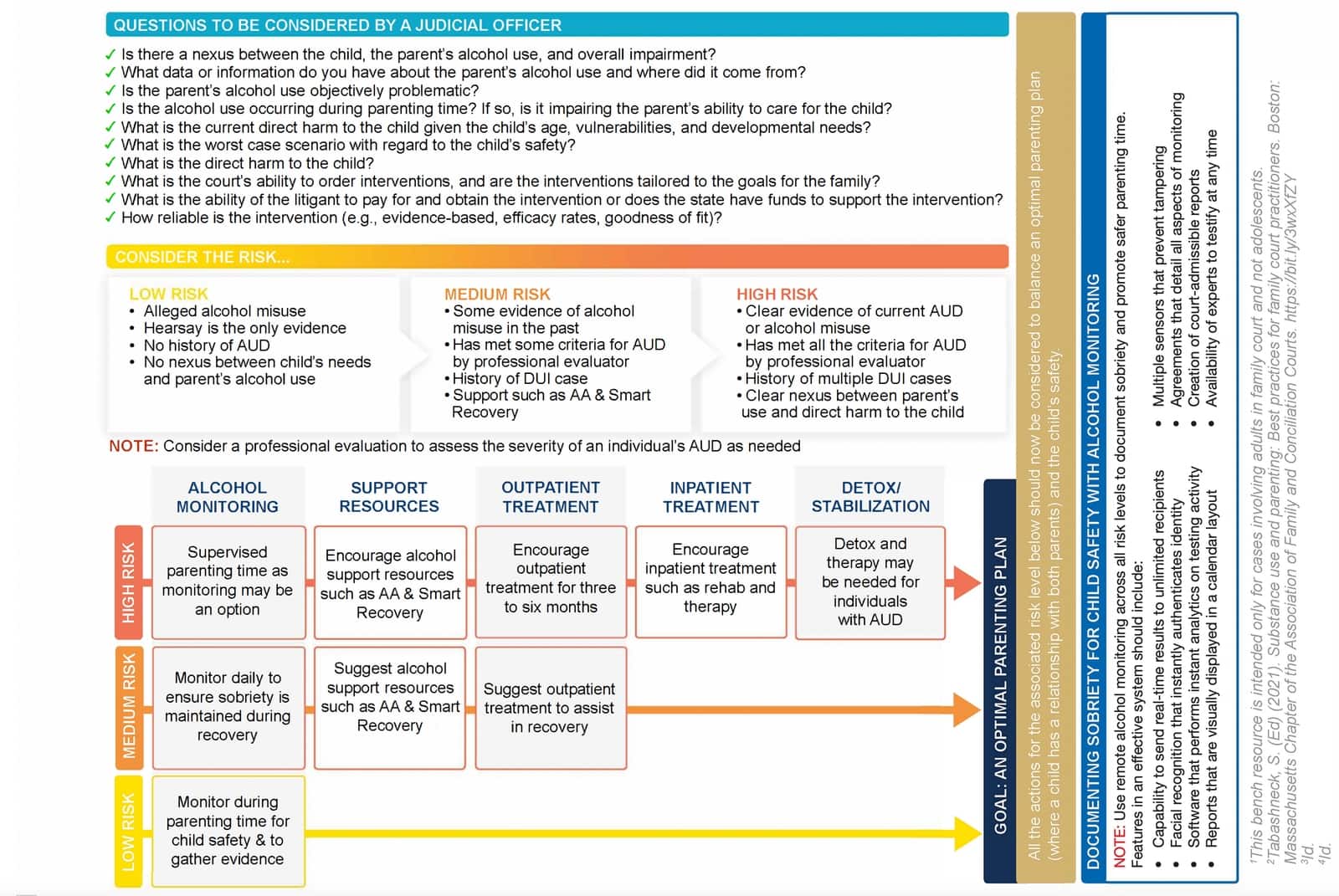
Carla: Absolutely. And I will say though that we do deal a lot, I do deal a lot with a parent, sometimes parents, plural, but typically one parent may have addiction issues. And that brings a whole another level of concern and of course safety concerns about the child or the children. And so we do typically address those in another format, but that is a factor that the judge will consider is like an addiction issue. And what has the addictive parent done, right? To prove themselves, to follow safety protocols and that type of thing. So, you there are parents who do are justifiably, they’re justified in their concern about the safety of their children. And we put safety factors in play and there’s many ways to do that.
Rob: Yeah, one of our sponsors is Sober Link and we’re always introducing that to people how like, because alcohol is a very common issue with custody and co-parenting.
Carla: Alcohol, drugs, there are other addictions that are not as prevalent, but even quite frankly, I just had a client that I got divorced. November will be a year and he called me last week. His wife is an alcoholic and had been before I got them divorced. She had been in and out of eight rehabs, eight. But we came up with a parenting plan that has strict protocol and when and how she can get her kids. Unfortunately in their stages, stage one stage phases state phase one two three unfortunately, she fell off the wagon. He found her passed out in her house with alcohol and all kinds of things around her. And so now we’re getting ready – I’m actually Monday meeting with the Guardian ad litem in that case to decide like what do we do next? Luckily this guy isn’t bitter and angry like a lot of people would be. And so he’s trying to do it in a very fair and reasonable way for his ex-wife because she does look, it’s a mental health medical issue when you have an addiction. So he luckily is actually approaching it in a very positive way, just like he did in the divorce. But sometimes we don’t have that. he would have, other people would have filed an emergency motion to change custody prevent her from having any time and keep the kids in fairness, which he has a right to do, from even going to her until a judge weighs in.
Rob: How much weight do courts give to a child’s own wishes about where they want to live?
Carla: Great question. So in Georgia, when a child turns 14, they have a right to elect which parent they want to live with. The election is a presumption unless the other party can prove that the parent they’re electing to live with is unfit. So the judge is gonna put a lot of weight on where they want to live, assuming there’s not an issue with fitness, but that doesn’t mean the child can choose what the schedule should be. And I think a lot of people get that confused because they think that if the kid can elect who they live with, they get to elect when they see the other parent. And that’s just not true. In fact, it’s the opposite. There still will be a schedule in place. And the parent who has primary custody of that child, where the child elects to live, will need to facilitate the parenting plan, the time that that child should still be spending with the other parent. So the judge is gonna put a decent amount of weight on it unless the parent that’s not being elected to live with can prove unfitness. And unfit is, again, a high bar, right? So they’re probably going to, the election will prevail, but the physical time still needs to be determined.
And then the other interesting piece is, a child between 11 and 14 in Georgia, and it’s pretty young, 11, but 11 to 14 can vocalize which parent they want to live with, but that’s just sort of a vocalization, if you will. Many judges don’t want to talk to children. So in that particular case, there might be a guardian ad litem appointed in the case, which is a third person appointed to represent the best interest of the children. The child may vocalize to the guardian ad litem, hey, I really wanna live with my mom and I really wanna live with.
Rob: Yeah, makes sense. Right, 11, that is young to have that kind of decision-making power. For the parents listening that are fearing losing custody, what’s one misconception that you see about how custody really works?
Carla: So it’s like I said, mean, parents start out, it doesn’t start with a mom or a dad has more leverage, if you will. Parents start out on equal footing. And then we look at if there’s any concerns or issues, is there addiction? Is there domestic violence? Is there fill in the blank? So it could be a number of things.
Was there one parent working so much to provide for the family that they just didn’t have as much time with the kids? That didn’t make them a bad parent. It doesn’t make them unfit. And a lot of people may, and we see this so much in today’s world, work really hard in their 20s and 30s and 40s because the goal is to retire early or have enough of a nest egg if they want to. So why should they be punished if they did that?
And then decide, you now I’m getting divorced, but I want to spend time with my kids. I haven’t really had that opportunity. So it’s a misconception that you’re just going to lose custody. You’re not going to lose custody. you’re, you know, you might not get the, be the primary custodial parent. You may not, you know, we have, we have areas of decision-making, health, education, religion, extracurricular activity. I call that the here acronym, right?
You may only get religion when you’ve always been the one to pick the school or help with homework and not get education. So I think it’s a misconception that people think they’re just going to lose, even when you have bad facts on your side, whether it’s alcoholism or drug addiction or sex addiction or gambling, because those are like the four big addiction areas I see a lot.
You’re not just losing and you may like my case that I just referenced, you may have a plan like what we call a step up plan where there’s phases. And if you meet the requirements in phase one, you get to phase two and meet the requirements in phase two and so on. like in phase one, you may have to sober link four times a day, maybe get, you know, blood test or urine testing once a week or something of that nature. If you follow that and do everything for six months, you jump to phase two and it’s less and less restriction. And as long as you’re following the protocol and passing and doing all the things required of you, then you should get to, hopefully, if it’s a decent parenting plan and both parents are good fit people, you get to some form of joint custody.
Rob: Yeah, and I imagine a lot of people’s experience with this is contentious, they’re soon to be ex saying you’re never going to get the kid so they’re coming at it. There’s like a big knowledge gap. It’s emotionally charged, and they don’t really know what the law is. So a lot of people are coming in a fearful way, or they’re like, are they going to take everything and it’s you need to speak to an attorney and really figure out what the law is and what’s what’s real and what’s just idle threats.
Carla: That’s right. And what I see a lot under that kind of example that you’re giving is the party making the threats has been doing what we call divorce planning. So they may have started six months earlier talking to lawyers, researching, talking to friends they know have gotten divorced. And that’s what we call the divorce planning party in the case. And then you’ve got this other party who’s hearing threats, completely caught off guard, right? Whether they should have been or not. mean, a lot of people are caught off guard, but they really did see the signs, right? If that makes sense. So the one feeling threatened because they’re caught off guard, they just need to go meet with a lawyer, make sure it’s someone well qualified, highly reputable, that knows what they’re doing, that’s done it for enough time where they can really advise you. And so even if you’re the addict, the abuser, whatever it is, that lawyer should be able to help you understand what do I need to do in order to get the best result for my case. And that’s hopefully gonna put that person’s mind at ease a little bit, especially if they figured out, they usually figure out their spouse met with their lawyer, you know, six months or a year earlier.
I sometimes meet with clients once, twice, three times a year and nothing’s ever filed. So people just wanna get information and I always tell those clients, knowledge is power. And so if you can have knowledge and understand the process, then you can at least be empowered with knowing what are you getting yourself into if you go down this path.
Rob: The person that is kind of feeling like this came out of nowhere and now they’re in a fight with this person, maybe they’ve met with a lawyer, maybe they haven’t. Is there any scripts? putting you on the spot here. anything that you would say like while you’re in that moment, just be like, I know saying less is more, I need to think about that or let me talk to an attorney. How do you advise clients to handle like that, that really those threats and that tension at home?
Carla: So, so pretty much by the what you’re saying is they’re now meeting with me and the other side is making these comments or threats and they’re having to live under one roof, especially children. I always tell my clients do more listening than speaking.
Rob: Right.
Carla: That is very hard for people in these situations, right? Because they want to defend themselves. They want to defend or counter whatever the accusation or the threat is. But I say do more listening than speaking. I say document everything. You want to document everything. So you’re now coexisting under one roof with these children who should be completely kept out of this.
Do not involve the kids. Do not tell the kids what’s going on. And when they ask, you have to say to them, and this is hard for people, these are adult issues and the adults will handle it, right? And so I just, if the client will at least follow those two or three points of information, then they’re starting out on the right foot. And then they can start to build their case. And they can go back and they can go see.
Rob: Yeah.
Carla: What was going on six months ago that he would have gone or she would have gone to meet with this lawyer? And then they start putting their timeline together and it makes more sense and it empowers that person because they’re like, now this makes sense, right?
Rob: That’s a great answer. And it was kind of going to be my last question is like if you could give somebody a piece of advice that is starting custody case, what would it be? It sounds like do more listening than speaking, document everything. Any other pieces of advice for somebody that’s starting this process?
Carla: And start to build what I like to call the history of the marriage, incorporating, I always tell people start from either right before they got married or right after, but incorporating anything that could be relevant, whether it’s a contested custody case or whether it’s just about money, discussions about staying home, discussions about, you know, working part time, discussions about you know, who would be responsible for what? Do you have any evidence of that? Because once they start putting together what I call their history, they remember, my gosh, I think I have a whole text chain with the nanny where my spouse explained this is what we’re looking for and this is why. Like, you’d be surprised at what will trigger your memory when you start to recap your history.
And so if you can start your history, look for your evidence, document everything, that is huge. And that’s not just about the kids, but it’s about the money as well, right? Because I know this isn’t really about the money, but it’s important. Then you’re at least preparing yourself and empowering yourself and your lawyer for information that he or she’s gonna need for advocating on your behalf.
Rob: And I imagine besides logistically, it can be therapeutic to get it out of your head onto a piece of paper because, you know, our minds can just spin. And it sounds like good advice for many reasons to document.
Carla: 100%. And a lot of times if these cases get further along and they’re being interviewed either by the guardian ad litem or the custody evaluator or if their take if their deposition is being taken, that history helps trigger and things to remember that they may not have. And it may have it may be something that helps the outcome of their case in their favor.
Rob: Well Carla, this was very helpful and for anybody listening, let people know how they can connect with you.
Carla: Yeah, I mean the best way my office is here in Sandy Springs are phone numbers 404-256-0010. If it’s a potential new client, they’ll let the person who answers the phone know and they’ll put them through to one of my paralegals who will get the ball rolling and we can schedule a consultation.
Rob: Carla, thank you so much for being on the podcast today.
Carla: Thank you for having me and take care.
The DivorceLawyer.com Podcast with Rob Roseman, Featuring Carla Stern, Family Law Attorney & Partner, Stern Edlin Graham Family Law
Contact Information – Find Carla online here, Stern-Edlin.com or her firm’s exclusive listing on DivorceLawyer.com here, Stern Edlin Graham Family Law, P.C. .



Stay in the Know
Discover Related Articles

















































































Introductions, no pressure
Connect with a Top Divorce Attorney
in Columbus, OH
Go to Columbus, OH page
Are you in a different location? We can introduce you to the best family lawyers in your area